Be yourself; Everyone else is already taken.
— Oscar Wilde.
This is the first post on my new blog. I’m just getting this new blog going, so stay tuned for more. Subscribe below to get notified when I post new updates.
Be yourself; Everyone else is already taken.
— Oscar Wilde.
This is the first post on my new blog. I’m just getting this new blog going, so stay tuned for more. Subscribe below to get notified when I post new updates.
“The year 1970 was a year with no predominant look. Walk a block or so on any big city street, you’de see women wearing Indian block-print bedspread dresses, tight tie-dye T-shirts and hip hugger jeans, afros, boots that hooked up the front, long calico dresses, rose-printed black-challis dirndl skirts, maxi coats, and microminis.”
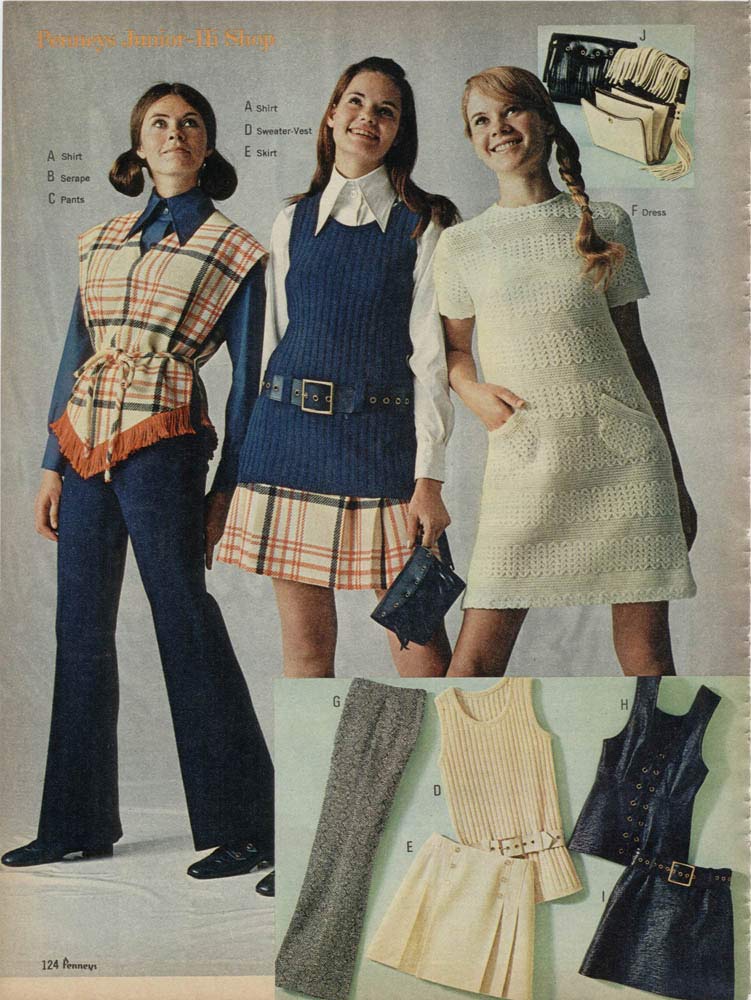
Fashion in the ’70s covered many genres and styles. Thanks to a penchant for creativity and expression, the decade saw the birth of many trends that continue to influence fashion today. As well as the instantly recognisable disco and hippy styles of the era, there were also boho-chic, punk and glam rock, folk and ethnic, safari and military, and sporty-chic fashions. Included amongst these trends were also the key items and details for which the decade is now known, such as earthy tones, suede, bell-bottom pants, fringing, and high-waisted designs.
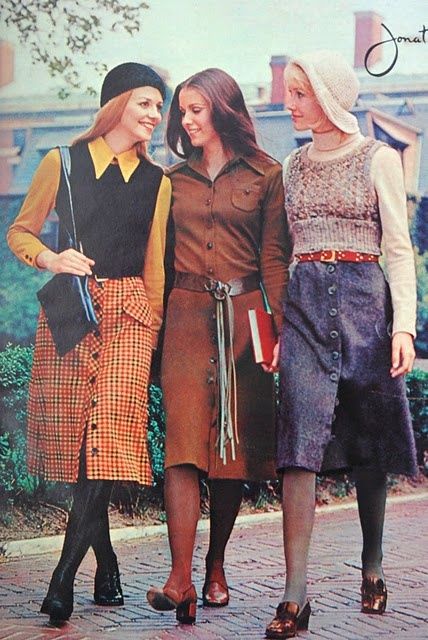
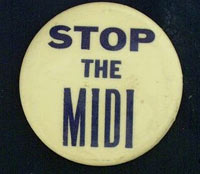
The midi was slightly different than long skirts from the 1950s. It was slit and slashed, laced-up or zipped-up, strapped or wrapped to one side and sometimes buttoned down the front. It flattered the young and thin most, because it emphasized a small midriff, waist and hips. How the leg met the hem was its most critical feature.
Like the fashions of the decade, the hairstyles were also diverse. While bohemian babes preferred a natural look, disco divas opted for shaggy cuts instead. Bangs were also a favoured look for the decade and were sported by many women.
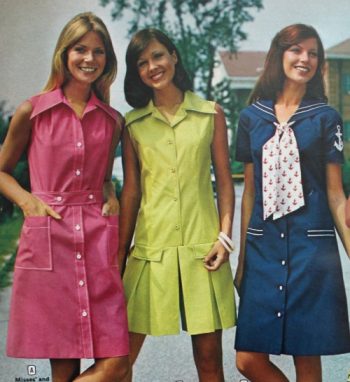
The mini shift dress, jumper dress, drop waist dress and tunic dress were still trendy dress styles in the early 70s. Sleeveless jumper dresses were worn over short or long sleeve shirts in winter with high knee socks. Drop waist shift dresses and button front sheath dresses gave a nod back to the 1920s flapper era. This time they were made of polyester double knits that were stiff enough to withstand wrinkles and staining. It was the perfect material for the age of low-maintenance fashion and big bold colors. Many dresses had oversized collars and some started to sport hippie prints in yellow, green, and orange flowers or paisley swirls.
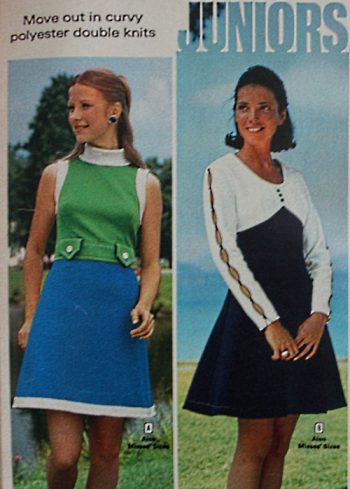
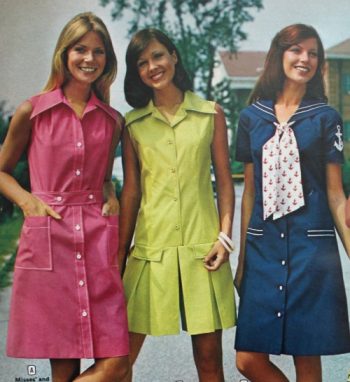
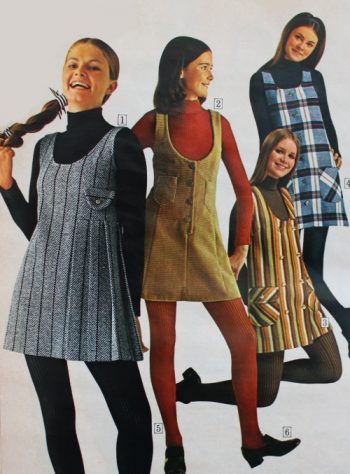
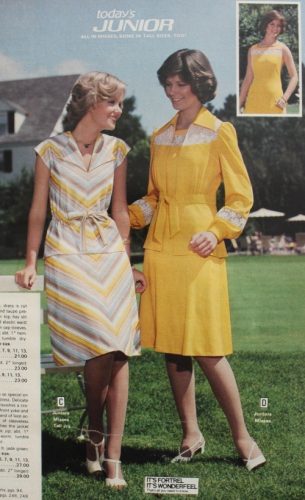
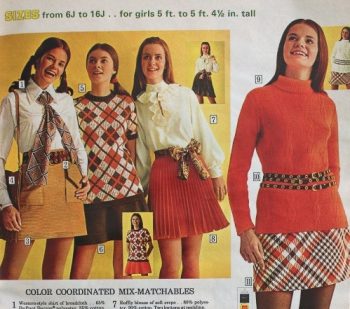
By 1973 dresses were looking more like ’40s and ’50s fashion with A-line or pleated skirts and button down tops. Simple one-piece dresses with a belt, cap sleeves, and swingy skirt or the two piece tunic blouse, skirt and tie belt made up most casual ’70s dresses. Many winter dresses came in the button up shirtwaist style with long bishop sleeves and matching belt. Necklines were still quite modest. Pussy bow neckties, small slits, mandarin collars, and large fold-out collars added variety without exposure. In the final years, the drawstring neck and waist belt along with a hemline that dropped to a few inches below the knee loosened up dresses even more.
Colors ran the full spectrum. Jewel tones in fall/winter, pastels, and white in summer. White was an especially popular color for everything from dresses to hats, handbags to shoes. Both daytime and evening, especially evening, turned to white as the hottest color of the ’70s.
“Fashion is not something that exists in dresses only. Fashion is in the sky, in the street, fashion has to do with ideas, the way we live, what is happening.” – Coco Channel
Women’s pants in the 70s had more diversity than the previous two decades combined. Some were waist high and wide leg while others were hip huggers with only a flared leg. Some were tight cigarette fit, straight leg, or very baggy. Some had cuffs, some didn’t. For most women, wearing cotton or polyester knit high waisted and wide leg pants in pastel colors paired with a tunic top, button-down blouse, or snug knit shirt was a daily fashion. Simple and comfortable, pants dominated most of the 1970s for both day and dressy evenings.
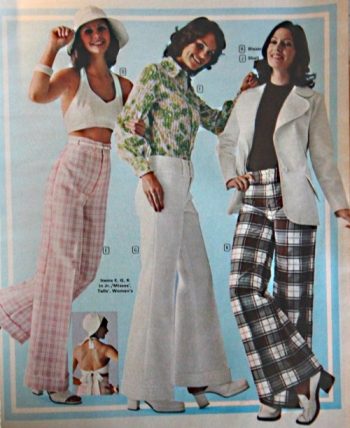
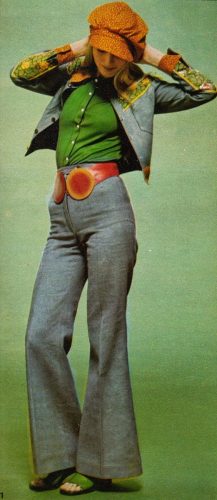
Outside of the office women’s casual skirts came in every length from the micro mini to a floor-length maxi. The mini skirt was a carryover from the 60s, still worn by teens and young women until 1973 when skirts dropped to the floor for the first time since the turn of the century. The most popular length and styles were the straight or pleated knee-length A-line skirt. They were roomy around the hip and legs yet often had a partial or full elastic waist for comfort in the middle. These grew longer at the end of the decade when the midi length peasant skirt came out of the hippie movement and into the mainstream. Tiers, gatherers, tribal prints and inset lace created a much more effortless and casual look to a changing decade.
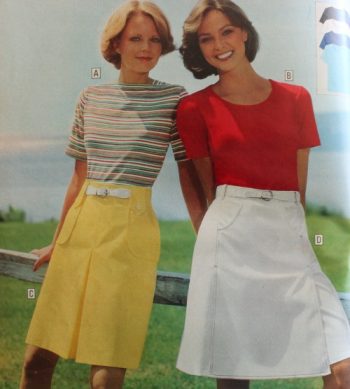
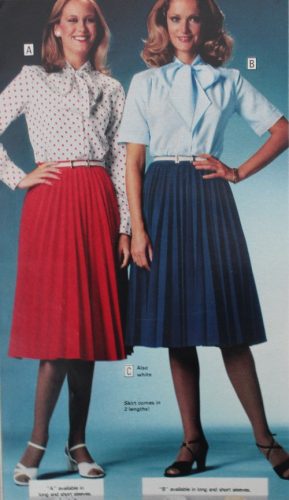
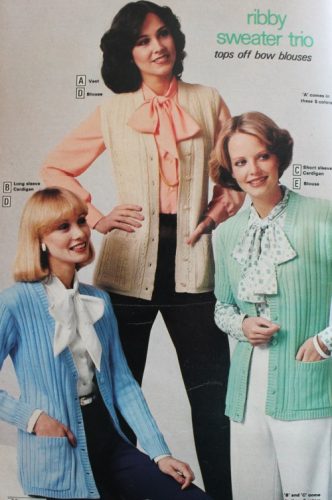
70s blouses were conservative button-down styles with oversized point collars. Polka dots, paisley, floral, and solids made into blouses with big pussy bows or small bow ties at the neck. Long sleeves featured the wide dolman shape or straight sleeves with a balloon wrist. Silk blouses were finally (more) affordable than they have been before WW2. Women saved and splurged on this natural fiber otherwise they work silk-like synthetics which were hot to wear. Sexy blouses had a very low v-neck, something wandering eyes hoped would reveal some cleavage. Since many small chested women didn’t wear bras this wasn’t an uncommon occurrence.
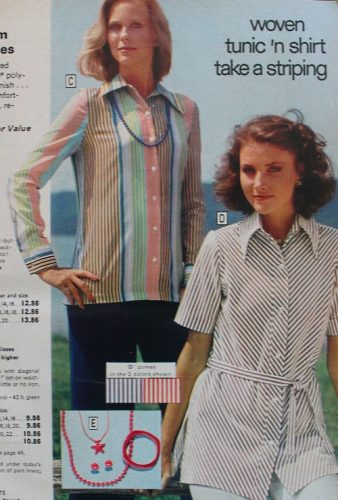
Tunic shirts were the ultimate in comfort women’s shirt. The long length also did a great job of hiding big hips, busts and tummies instead of showing them off in a tight t-shirt. They paired well with a comfortable pair of jeans or trousers or layered over pleated skirts. In cotton, they were an ideal summer shirt. In matte jersey or a polyester print knit they could be dressy enough for a dinner party. Each came with a matching tie belt to accent the waist without the pressure of a leather belt.
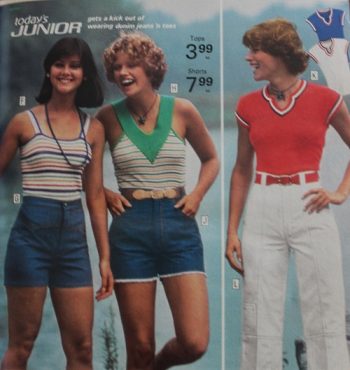
Mid-drift button down check prints shirts or crop knit tops were summertime casual favorites. The halter crop top was also a favorite look paired with high waisted flares or short shorts. Polo shirts zipped or buttoned up or were left open in a small V with straight or peter pan collars. They fit snug but not tights with short cap sleeves.
1970’s FASHION TRENDS
This is an example post, originally published as part of Blogging University. Enroll in one of our ten programs, and start your blog right.
You’re going to publish a post today. Don’t worry about how your blog looks. Don’t worry if you haven’t given it a name yet, or you’re feeling overwhelmed. Just click the “New Post” button, and tell us why you’re here.
Why do this?
The post can be short or long, a personal intro to your life or a bloggy mission statement, a manifesto for the future or a simple outline of your the types of things you hope to publish.
To help you get started, here are a few questions:
You’re not locked into any of this; one of the wonderful things about blogs is how they constantly evolve as we learn, grow, and interact with one another — but it’s good to know where and why you started, and articulating your goals may just give you a few other post ideas.
Can’t think how to get started? Just write the first thing that pops into your head. Anne Lamott, author of a book on writing we love, says that you need to give yourself permission to write a “crappy first draft”. Anne makes a great point — just start writing, and worry about editing it later.
When you’re ready to publish, give your post three to five tags that describe your blog’s focus — writing, photography, fiction, parenting, food, cars, movies, sports, whatever. These tags will help others who care about your topics find you in the Reader. Make sure one of the tags is “zerotohero,” so other new bloggers can find you, too.

 Classic 70's Fashion